
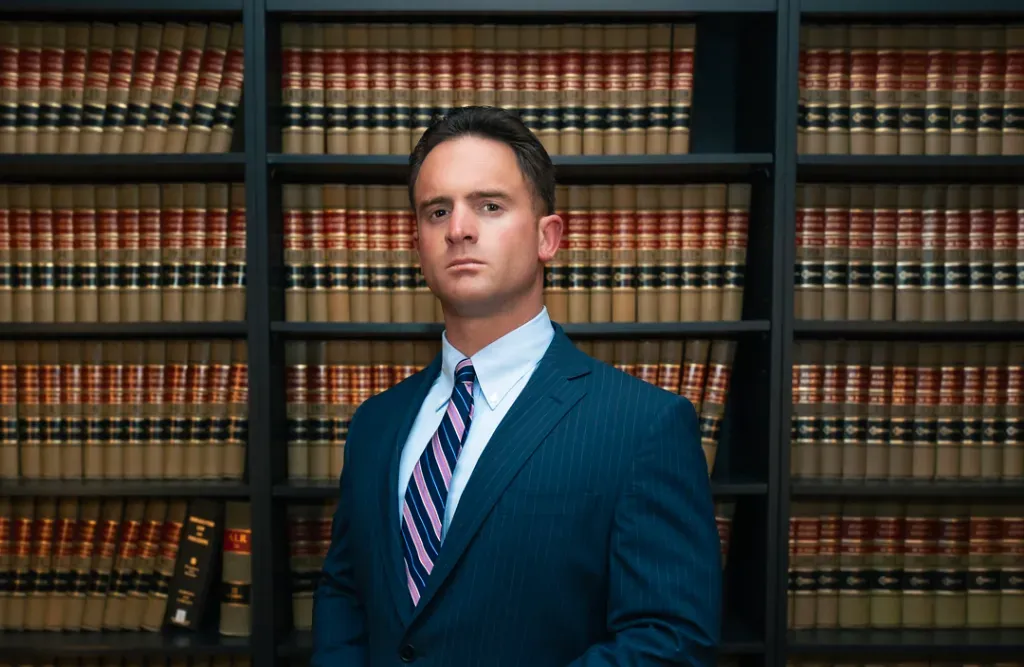
Dylan C. DiLibero, Esq.
Attorney
Criminal defense, state and federal · Personal injury · Civil litigation
View profileConnecticut state bar; New Jersey state bar and U.S. District Court for the District of New Jersey.
Criminal defense · Federal & state
White-collar crime investigations begin long before an arrest. By the time you hear about it, the government may already have a head start.
White collar criminal investigations rarely begin with a knock at the door. They begin quietly when a subpoena arrives, an FBI agent leaves a card with your assistant, or your bank calls about a compliance inquiry. By the time you hear about it, the government may have been building its case for months or even years. In federal white-collar prosecution, preparation time is in the government’s favor unless you act first.
We intervene early, before charges are filed, and stay through the last day of trial. That means protecting your rights during the investigation, responding to grand jury subpoenas, and litigating the case in federal court (when necessary). We also represent clients in civil enforcement actions that often run alongside criminal investigations, like disgorgement proceedings, SEC inquiries, and civil fraud claims.
For a white-collar defense consultation, identify the person or business seeking advice, the agency or court named in the papers, and any related civil, business or regulatory matter. Keep each proceeding identifiable rather than combining different notices into one timeline.
Note what has already happened and what remains scheduled, using the actual papers to identify dates. If property was also seized, keep the forfeiture notice and property records with the related file. For an existing court case, see the federal consultation checklist.
Schemes to defraud a financial institution, or to obtain money or property held by a bank through false representations. Often charged alongside money laundering and wire fraud.
Federal health-care and Medicare/Medicaid billing-fraud prosecutions often begin with a sealed qui tam complaint or a compliance audit long before investigators make contact. Early intervention matters here more than almost anywhere.
Money laundering penalties depend on the charged provision: 18 U.S.C. § 1956 generally carries up to 20 years, while § 1957 generally carries up to 10 years. Sentencing and the relationship to other counts depend on the facts and applicable law. We assess both the laundering allegations and the underlying conduct.
The Racketeer Influenced and Corrupt Organizations Act is a powerful prosecutorial tool that carries significant civil exposure alongside criminal charges. We handle both tracks.
You do not have to be guilty of the underlying conduct to be charged with making a false statement to a federal agent. Do not speak to investigators without counsel present.
Section 201 covers bribery of federal officials and illegal gratuities; § 666 covers theft and bribery involving state and local governments and organizations that receive more than $10,000 a year in federal funds. These cases often involve cooperating witnesses and wiretap evidence.
The Computer Fraud and Abuse Act is interpreted expansively by federal prosecutors. We defend CFAA charges in criminal and civil proceedings.
For non-terrorism predicate offenses under 18 U.S.C. § 1028A(a)(1), aggravated identity theft carries a mandatory two-year sentence that must run consecutive to the underlying offense, and a judge cannot impose probation or shorten the fraud sentence to offset it. Since Dubin v. United States (2023), the identity use must be at the crux of the fraud, and we attack the predicate offense and the identity-theft count in parallel. We also handle state fraud charges, including obtaining property by false pretenses (R.I. Gen. Laws § 11-41-4; M.G.L. c. 266, § 30), forgery and uttering, insurance and workers’-compensation fraud, and Medicaid fraud, which Rhode Island and Massachusetts actively prosecute (often on insurer or agency referral, and frequently alongside a parallel federal investigation).
The most valuable work often happens before any charge is filed. We leverage proffer sessions, grand jury practice, and direct engagement with prosecutors to understand the government’s theory and shape it before it hardens.
We respond to grand jury subpoenas, manage document productions, assert applicable privileges, and advise witnesses on their rights before they speak to investigators or testify.
Federal white collar cases often run alongside civil enforcement actions. We coordinate the defense across all tracks to avoid a misstep in one proceeding damaging another.
We leverage every Fourth, Fifth, and Sixth Amendment issue that the record will support. When relevant, we file motions to suppress evidence, challenge the sufficiency of the indictment, and bring other pretrial motions that narrow or eliminate the government’s case before trial.
We negotiate directly with the U.S. Attorney’s Office and state prosecutors to facilitate proffer agreements, plea negotiations, and cooperation arrangements with a clear-eyed view of what the government has and what they’re willing to do with it.
When trial is the right answer, we try the case in court.
From the first call to the work itself.
When you contact us, you are not entering a queue.
What we do. Call 401-621-9700 or request a consultation online. We take your details and check for conflicts of interest before we discuss your matter.
What to prepare. Your contact details, the people and businesses involved, and the agency or court identified in the inquiry or case papers.
We will give you honest answers about where you stand and what your options are.
What we do. An attorney reviews what happened, the documents you have, and any deadlines that may apply, then talks you through your options.
What to prepare. Any inquiry letter, subpoena, charging paper, agency correspondence or related civil demand, with the dates shown on those documents.
We prepare every case as though it’s going to trial.
What we do. If you decide to hire the firm, we confirm the engagement and get to work, and you know who is handling your matter.
What to prepare. Keep any new notices, letters, or court papers and send them to us as they arrive.
Every matter is different, so the steps and how long each one takes vary.
Attorney
Criminal defense, state and federal · Personal injury · Civil litigation
View profileConnecticut state bar; New Jersey state bar and U.S. District Court for the District of New Jersey.
Trustworthy, professional, and knowledgeable. DiLibero & Associates took the time to explain everything clearly and always made me feel informed throughout the process. Their honesty, responsiveness, and attention to detail gave me confidence every step of the way. I highly recommend them to anyone looking for legal representation they can trust.
Translated from the reviewer's original English on Google.
 Tony Levada
Our go to! We have utilized DiLibero & Assoc for a few years now and highly recommend. They are easy to reach, operate in a timely manner, and in each instance- they guided us and handled our situations surpassing our expectations. So grateful to always know exactly where to turn! And to actually get resolution. On top of that being treated with dignity and respect- definitely minimizes the stress when going through difficult predicaments.
Translated from the reviewer's original English on Google.
 Aimee Zwolinski
One of the best experiences i’ve ever had legally was with this firm! Lisa and Dylan are extremely professional and determined to get you a desirable outcome! They kept me well informed throughout the entire process and were nothing but professional, understanding, and helpful. I will always recommend this firm due to its staff’s dedication to getting you results that matter!
Translated from the reviewer's original English on Google.
 Elaina M
I had a great experience working with Dylan. He helped guide me through a situation I was dealing with involving a car dealership, and from the start he was professional, knowledgeable, and very easy to work with. Dylan took the time to explain everything clearly and made sure I understood my options every step of the way. Even though the situation didn’t require anything overly complicated, it was clear that Dylan really knows his stuff and genuinely cares about helping his clients. He was responsive, straightforward, and made the entire process much less stressful. I would absolutely recommend Dylan to anyone looking for a reliable and trustworthy attorney. Thanks again for your help!
Translated from the reviewer's original English on Google.
 Stephensilva Silva
I couldn’t be more impressed with Delibero and Associates. From my very first consultation, they were attentive, professional, and genuinely cared about my case. Dylan took the time to explain every step of the process and kept me informed the entire way. Their expertise and attention to detail gave me complete confidence that I was in excellent hands. What stood out most was their compassion, they treated me like a person, not just a client. The entire team worked efficiently, communicated clearly, and delivered results that exceeded my expectations. If you’re looking for a law office that combines deep legal knowledge with true dedication to their clients, I highly recommend Delibero and Associates. They turned a stressful situation into a positive outcome.
Translated from the reviewer's original English on Google.
 Michael Marzilli
Testimonials reflect individual experiences. Prior results do not guarantee a similar outcome.
Reviews describe individual clients’ experiences. Every matter is different.
Read all reviews on Google (opens Google Maps in a new tab)
Do not speak to them. You are not required to answer questions from federal investigators, and anything you say (even if you believe it’s helpful or exculpatory) can be used against you. Politely decline to speak without an attorney present and call us immediately.
A grand jury subpoena is a court order, and ignoring it can lead to contempt. You may be able to narrow it, move to quash it as unreasonable or oppressive, or assert a privilege, so your response requires careful legal guidance. We review the subpoena, assess which privileges apply, manage the document production process, and advise you on your rights before you produce anything or testify.
Yes, and the earlier you talk to an attorney, the better. The pre-charge phase is when the most important decisions get made: what you say to investigators, what documents you preserve or produce, whether to proffer, whether to approach prosecutors proactively. The government has been building its case; we help build your defense.
A criminal case is prosecuted by the government (the U.S. Attorney’s Office or a state prosecutor) and can result in prison, fines, and a criminal record. A civil enforcement action is brought by an agency such as the SEC or the FTC, by the Justice Department under the False Claims Act, or by a state AG, and typically seeks monetary penalties, restitution or disgorgement, and injunctive relief. They often run simultaneously, and a mistake in one proceeding can damage the other. We handle both.
A proffer is a meeting between a target or subject of an investigation, their attorney, and federal prosecutors and agents, held under a written proffer agreement. The agreement usually bars direct use of your statements in the government’s main case, but it typically allows the government to follow leads from them and to use them to impeach you, so the protection is narrower than immunity. Done right, a proffer can shape the government’s case before it’s filed. Done wrong, it can make things significantly worse. We evaluate whether a proffer is in your interest before recommending it.
Federal white-collar cases are among the most resource-intensive in criminal law. We’ll give you an honest assessment of scope and fees at the first conversation, which is free. We’d rather you understand what you’re looking at from the start.
Search is not available right now.
